
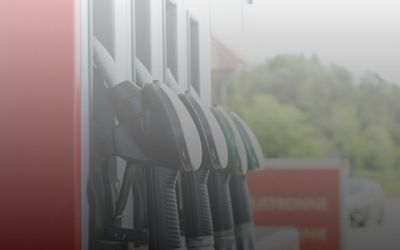
Fuel prices across the Philippines have surged to historic levels this week, and Pampanga — home to some of the country’s most fuel-dependent commuter corridors — is feeling it hard.
The double-digit increases that began Tuesday, March 10 are not a one-time shock. They are the ninth straight week of gasoline price increases and the eleventh for diesel, driven by the escalating conflict in the Middle East.
Here is what Pampanga residents need to know.
How big is this increase — and why?
The Department of Energy (DOE) confirmed that for the week of March 10–16, gasoline prices rose between ₱7 and ₱13 per liter depending on the brand, diesel surged between ₱17.50 and ₱24.25 per liter, and kerosene — widely used for cooking and heating in lower-income households — jumped between ₱32 and ₱38.50 per liter.
To put that in context: the cumulative adjustments for this week alone are the highest weekly movement in Philippine fuel price history, according to the Manila Bulletin.
Oil companies, at the direction of President Ferdinand Marcos Jr., staggered the increases across multiple days rather than implementing them all at once on Tuesday. Seaoil implemented its ₱11–13/liter gasoline hike in two tranches. Chevron spread its ₱7/liter increase over seven daily adjustments of ₱1 each. The intent was to prevent a single day of price shock. For motorists filling up daily or weekly, the effect is the same.
The cause: the ongoing US-Israel-Iran conflict has pushed global crude oil prices sharply upward. The Philippines, which imports virtually all of its petroleum, has no buffer against international market shocks under the Downstream Oil Industry Deregulation Act — the DOE monitors prices and can recommend action, but cannot legally mandate rollbacks.
How much you will pay at the pump
Before this week’s increases, RON 95 gasoline was trading in the ₱60–62/liter range in Central Luzon. After staggered increases through March 12, prices at major brands are now estimated in the ₱70–75/liter range for RON 95, with diesel approaching or exceeding ₱80/liter at some stations.
For a typical 40-liter tank fill-up on RON 95:
- Before (Feb 2026): approximately ₱2,400
- This week: approximately ₱2,800–3,000
- Increase: ₱400–600 per full tank
For Pampanga truckers and PUV operators running on diesel, the impact is far steeper. A 10-wheeler truck with an 800-liter diesel capacity now costs roughly ₱8,000–10,000 more per fill-up than it did two months ago.
Is another increase coming next week?
Likely yes. Early projections based on Mean of Platts Singapore (MOPS) trading data for the third week of March suggest gasoline may climb another ₱13–15 per liter and diesel a further ₱16–18 per liter. These are estimates only — final adjustments are not confirmed until oil companies notify the DOE on Monday nights.
PampangaToday will update fuel price coverage every Tuesday morning.
₱5,000 fuel subsidy for public utility vehicle drivers
President Marcos has ordered the release of a ₱5,000 fuel subsidy for public utility vehicle drivers, to be distributed initially in Metro Manila before expanding to other regions including Central Luzon. The timeline for Pampanga PUV operators to receive the subsidy has not been announced.
Marcos is also seeking emergency powers from Congress to temporarily reduce or suspend excise taxes on petroleum products — a move that could provide some relief if approved. The Department of Finance has not yet released estimates on foregone revenues.
The DOE, working with the PNP and DILG, has intensified monitoring at stations across Luzon following reports of overcharging and potential hoarding. Several stations have already received show-cause orders for non-compliance with pricing rules.
What the government cannot do under current law: mandate price rollbacks. The 1998 deregulation law explicitly removed the government’s power to set fuel prices. Emergency powers, if granted by Congress, would allow temporary excise tax adjustments — but not direct price controls.
What Pampanga commuters and drivers should know right now
If you commute via NLEX: Fill up before entering the expressway. NLEX station prices are typically ₱1–2/liter higher than off-highway stations in San Fernando, Angeles City, or Mabalacat under normal conditions. That gap may be wider during a period of staggered adjustments.
If you drive a diesel vehicle: Prices are still adjusting daily this week as part of the staggered schedule. Confirm current prices at your intended station before filling up — prices may differ by brand and may change day to day through the end of this week.
If you take jeepneys or tricycles: Fare adjustment petitions are almost certain. The Land Transportation Franchising and Regulatory Board (LTFRB) has not yet announced emergency fare increases for Central Luzon, but transport groups are expected to file petitions this week.
If you use LPG for cooking: Kerosene’s ₱32–38.50/liter surge this week will likely precede LPG price movement. Monitor LPG dealer prices closely over the next two weeks.
For NLEX cargo and logistics operators: The diesel increase is a direct hit to freight costs across the Central Luzon supply chain. Businesses dependent on trucking from Manila to Pampanga distribution points should expect fuel surcharges from logistics providers within days.
Pampanga’s LGUs can take immediate steps
The fuel crisis lands at a particularly difficult moment for the province. Rice prices remain elevated following last year’s El Niño disruptions. The suspension of Middle East flights at Clark Airport has cut a key OFW remittance pipeline. And with diesel surging, the cost of farming inputs — irrigation pumps, tractors, post-harvest transport — will rise across Pampanga’s agricultural municipalities.
There is no local fix for a global oil shock. But Pampanga’s LGUs can take immediate steps: fast-tracking the ₱5,000 PUV subsidy rollout to local operators, monitoring station compliance with DOE pricing rules, and coordinating with the LTFRB on fair fare adjustment parameters for local routes.
PampangaToday will monitor fuel prices, government relief programs, and local LGU responses closely in the coming weeks.
Fuel price data sourced from the Department of Energy, Inquirer.net Oil Price Watch, GMA News, Manila Bulletin, and Philstar. Pampanga-specific pump price data will be updated on this site every Tuesday. Sources: DOE Oil Monitor, Inquirer.net, GMA Network, Manila Bulletin, Philstar.
Related:
- Pampanga Traffic Today →
- Clark Watch — Flight Updates →
- Pampanga Gas Prices — Weekly Tracker → (publishing next Tuesday with confirmed prices)